
10 Remarkable Ways AI Is Transforming Professional Video Production
AI is transforming professional video production. Film production has always been a balance between technical precision and creative storytelling. Today, that balance is evolving rapidly as artificial intelligence becomes an increasingly valuable tool across every stage of production. From helping teams plan shoots more efficiently to assisting editors with time-consuming tasks, AI is transforming how content is created, managed, and delivered.
While AI is not replacing experienced professionals, it is streamlining workflows, reducing repetitive tasks, and allowing creative teams to focus more energy on storytelling. As companies, broadcasters, filmmakers, and content creators adopt these innovations, understanding how AI is changing video production has become essential for staying competitive.
At MTJIBS, we understand that technology continues to reshape the production landscape. However, no matter how advanced AI becomes, professional camera movement, cinematic perspectives, and expertly operated equipment remain critical components of exceptional visual storytelling.
AI Is Revolutionizing Pre-Production Planning
One of the most significant developments in AI transforming video production is its role in pre-production. Traditionally, planning a shoot required extensive manual effort involving scheduling, budgeting, script breakdowns, and location scouting.
Today, AI-powered platforms can analyze scripts, identify production requirements, estimate costs, and even recommend shooting schedules. Production teams can use these tools to identify potential challenges before cameras begin rolling.
This level of production workflow automation helps reduce delays, improve resource allocation, and create more efficient productions from the start.
AI Enhances Automated Shot Analysis
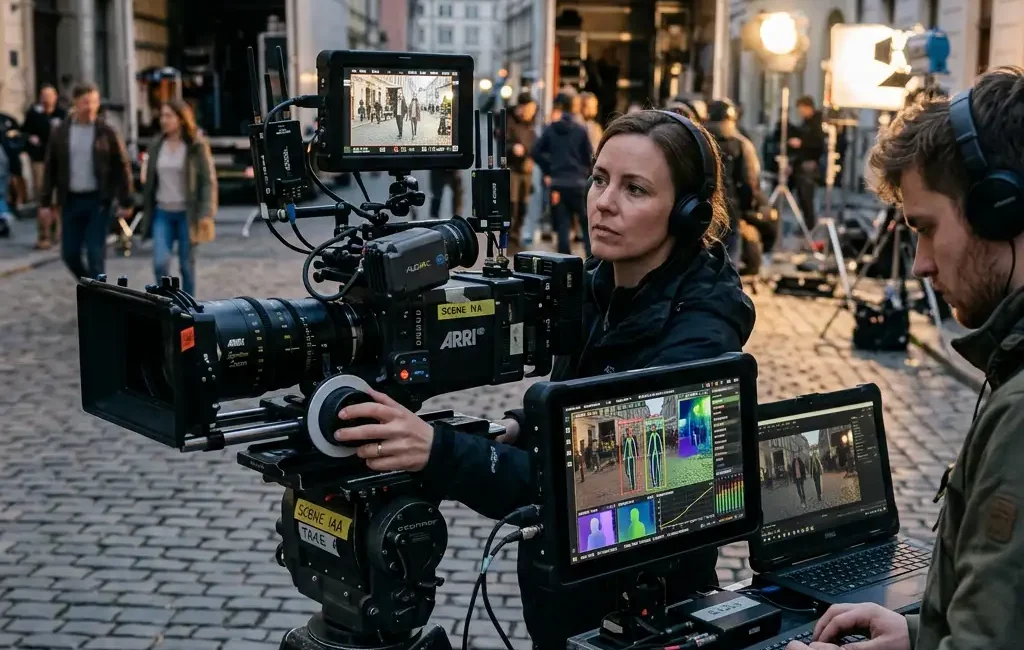
One of the most practical ways AI is transforming professional video production is through automated shot analysis. Modern AI systems can review footage and identify a wide range of visual elements, including faces, objects, camera angles, lighting conditions, scene changes, and even specific actions occurring within a frame. What once required hours of manual review can now be accomplished in a fraction of the time.
For production teams managing large volumes of footage, this capability is especially valuable. Whether working on a feature film, corporate video, documentary, or live event recording, editors often need to sort through hundreds of clips before the creative editing process can begin. AI-powered analysis tools can automatically tag and categorize footage, making it much easier to locate specific content when it is needed.
Instead of manually scrubbing through hours of recordings, editors can quickly search for particular subjects, interview segments, action sequences, or key visual moments. AI can also recognize recurring locations, identify camera movements, and group similar shots together, creating a more organized and efficient workflow. This level of automation helps eliminate much of the tedious administrative work that traditionally slows down post-production.
Beyond improving efficiency, automated shot analysis can also support creative decision-making. By helping editors identify the strongest footage more quickly, AI allows them to spend less time searching for clips and more time focusing on storytelling, pacing, and visual continuity. As a result, production teams can move from filming to post-production faster while maintaining the high-quality standards audiences expect.
As AI technology continues to advance, automated shot analysis is becoming an increasingly valuable tool for productions of all sizes, helping teams manage growing amounts of content without sacrificing efficiency or creative control.
AI-Powered Editing Tools Are Accelerating Post-Production
Perhaps the most visible example of video editing AI tools is their growing influence in post-production. What once required hours of manual review and repetitive editing can now be completed much more efficiently with the assistance of artificial intelligence.
Today’s AI-powered editing platforms can analyze large amounts of footage in minutes, helping editors identify the strongest takes, organize clips, and even generate preliminary rough cuts based on scene content, dialogue, or visual cues. Rather than spending valuable time sorting through hours of footage, editors can quickly locate the moments that matter most and begin refining the story.
AI is also transforming audio and content management tasks. Modern tools can automatically remove background noise, balance audio levels, generate accurate captions and transcripts, and identify unwanted pauses or filler words in interviews. These capabilities not only improve efficiency but also help maintain consistency across projects.
Importantly, AI is not replacing editors. Instead, it serves as a powerful assistant that handles many of the repetitive and time-consuming tasks that can slow down production schedules. This allows creative professionals to devote more attention to pacing, narrative structure, visual flow, and the emotional impact of the final piece.
As video production automation continues to evolve, post-production teams are finding new ways to deliver high-quality content faster than ever before. The result is a more streamlined workflow that reduces turnaround times while still preserving the creativity and craftsmanship that define exceptional video production.
AI Improves Real-Time Production Insights
During live productions, multi-camera broadcasts, and complex video shoots, production teams often need immediate access to critical information to keep everything running smoothly. Even minor issues with lighting, audio, framing, or equipment performance can impact the final product if they are not identified and corrected quickly.
AI-powered monitoring systems are helping crews gain deeper visibility into production workflows by continuously analyzing multiple data points in real time. These systems can evaluate exposure levels, monitor audio consistency, assess camera framing, and even track equipment performance throughout a shoot. Rather than relying solely on manual oversight, production teams can receive instant alerts when potential issues arise, allowing them to respond before those problems affect the quality of the footage.
In live productions, AI can also provide valuable audience engagement insights by analyzing viewer interactions and performance metrics as events unfold. This information helps producers and directors make informed decisions about camera selections, content pacing, and production adjustments while the broadcast is still in progress.
The ability to access real-time production intelligence allows crews to operate more efficiently and confidently. Production managers, directors, and technical teams can make immediate adjustments, reduce costly mistakes, and maintain consistent quality standards throughout the shoot. As AI technology continues to advance, these real-time insights are becoming an increasingly important tool for delivering polished, professional productions in fast-paced environments.
AI Is Transforming Broadcast Applications
The rise of AI broadcast technology is reshaping live television, sports coverage, news programming, and event production.
Broadcasters are increasingly using AI for automated camera tracking, content tagging, highlight generation, and audience analytics. Some systems can even identify key moments during sporting events and instantly create highlight packages.
While human operators still oversee critical creative decisions, AI provides valuable support that enhances speed and responsiveness during live broadcasts.
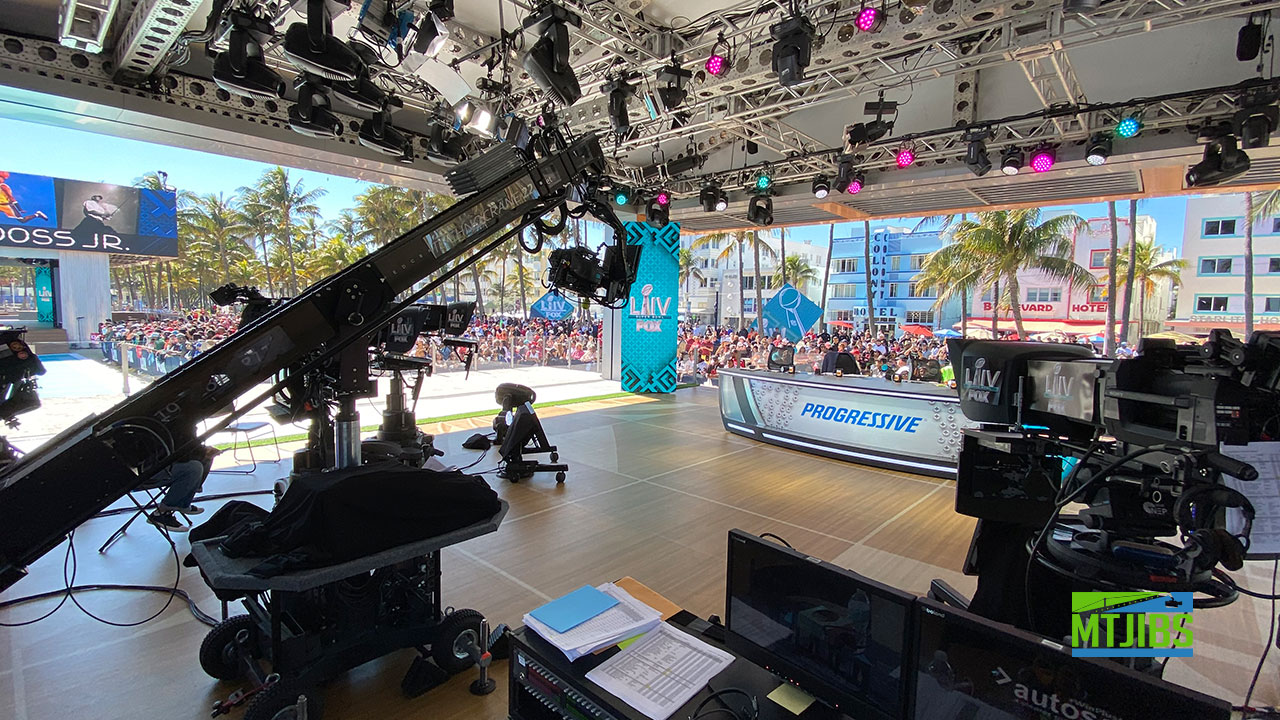
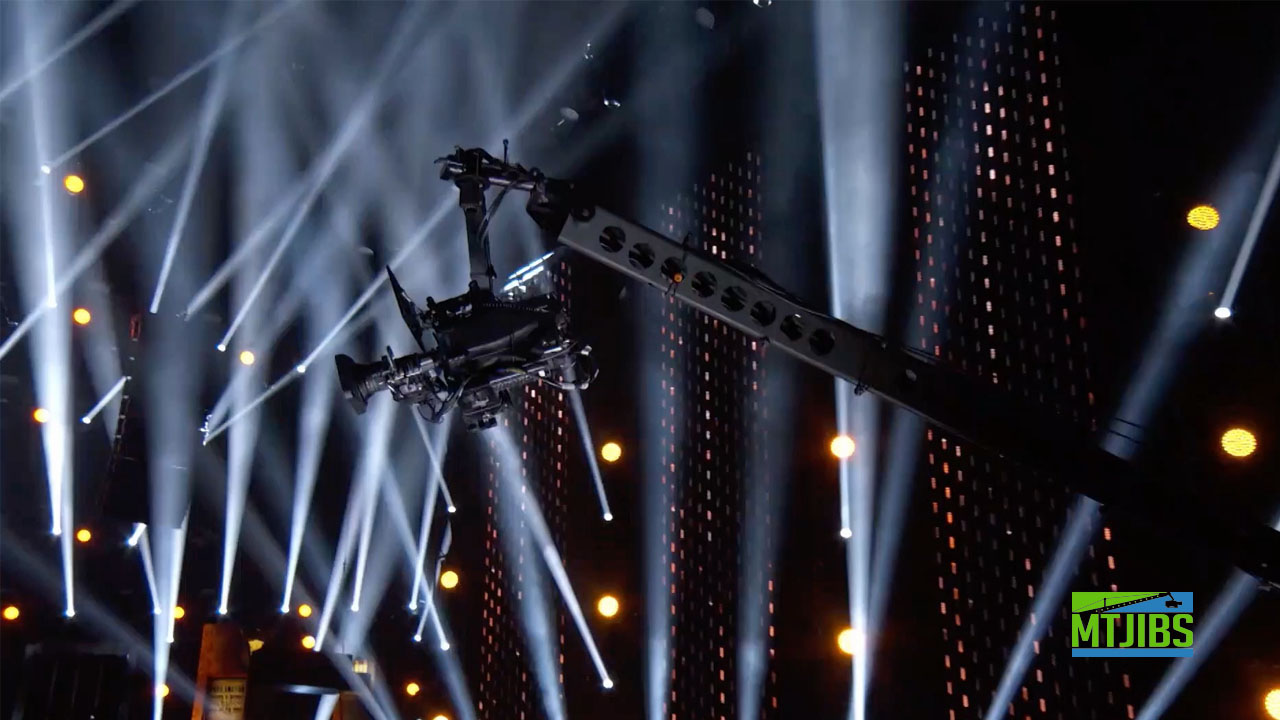
For productions utilizing camera cranes and jib systems, these technologies can work alongside experienced operators to capture dynamic visuals while AI handles supporting analytical tasks.
AI Supports Advanced Visual Effects and Content Creation
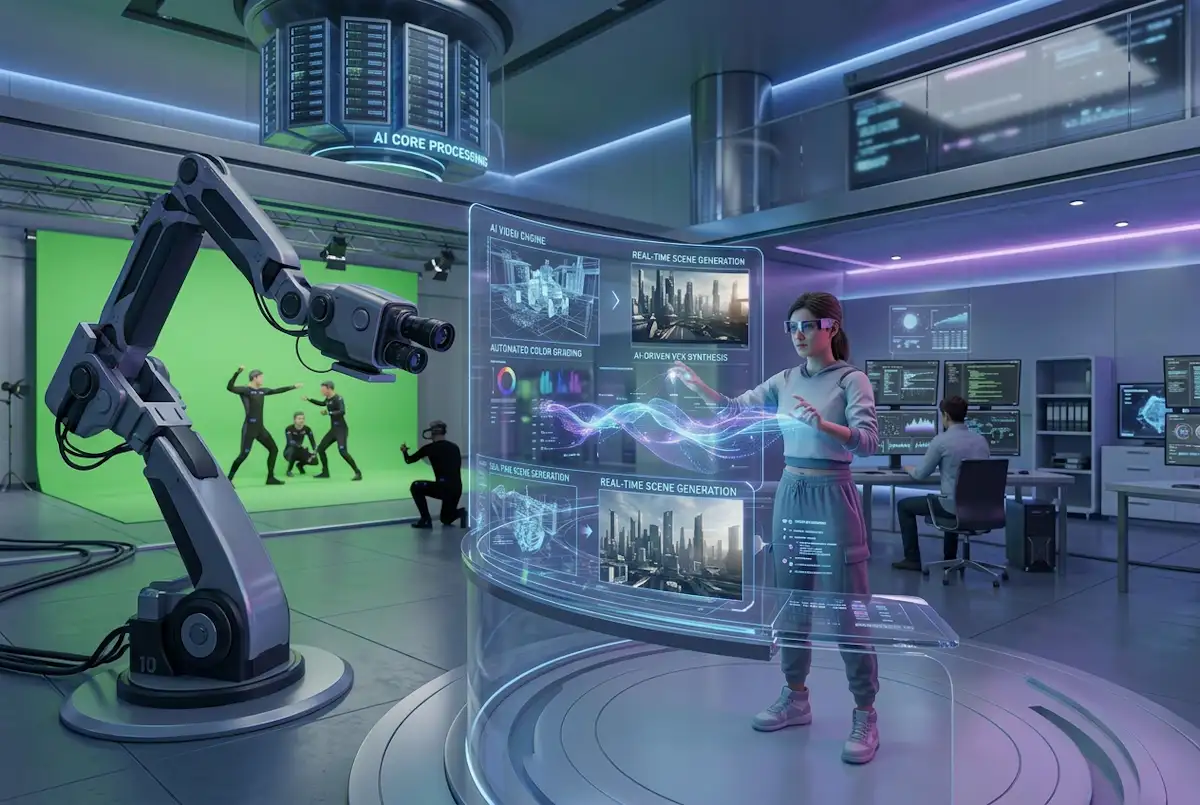
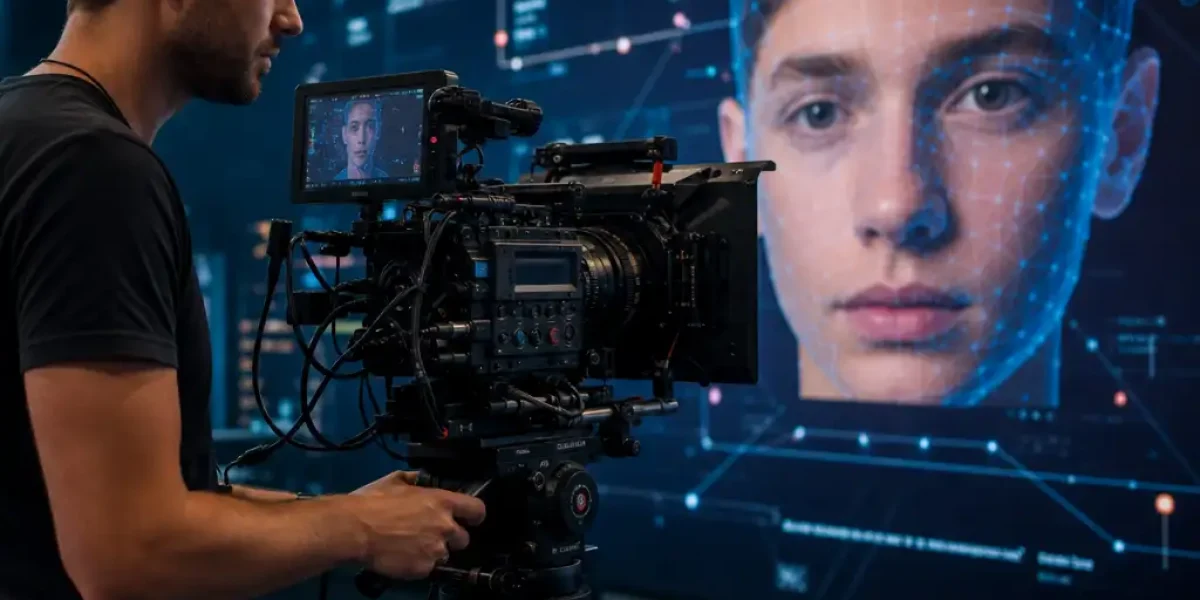
Artificial intelligence is opening new creative possibilities in visual effects, animation, and digital content creation. Tasks that once required extensive manual labor and specialized teams can now be completed more efficiently with the support of AI-powered tools, allowing production companies to achieve impressive results in less time.
Modern AI systems can assist with everything from background replacement and object removal to motion tracking and scene enhancement. Rather than spending hours manually masking subjects or cleaning up footage frame by frame, editors and visual effects artists can use AI to automate much of the technical work while maintaining a high level of quality. This not only speeds up production but also gives creative teams more time to focus on storytelling and artistic direction.
AI is also playing a growing role in the creation of virtual environments and digitally generated scenes. Productions that once required expensive sets, multiple filming locations, or large visual effects budgets can now explore creative alternatives using AI-assisted tools. These technologies help filmmakers visualize concepts, generate assets, and experiment with new ideas earlier in the production process.
As artificial intelligence film making continues to evolve, studios, agencies, and content creators are gaining access to capabilities that were once reserved for large-budget productions. While AI cannot replace the imagination and vision of skilled artists, it is becoming a valuable creative partner that helps transform ambitious concepts into reality more efficiently and cost-effectively than ever before.
As artificial intelligence film making tools mature, production teams can experiment with creative concepts that previously required significantly larger budgets and resources.
AI Is Improving Audience Analytics
Understanding audience behavior has become increasingly important for content creators.
AI-powered analytics platforms can evaluate viewer engagement patterns, watch times, drop-off points, and content preferences. These insights help producers create videos that better align with audience expectations.
By leveraging data-driven decision-making, production teams can improve content performance while maintaining creative integrity.
AI Helps Optimize Production Workflows
The growing demand for content means production companies must operate more efficiently than ever.
AI contributes to production workflow automation by streamlining administrative and operational tasks such as scheduling, asset management, metadata tagging, and project tracking.
These improvements reduce bottlenecks and allow creative teams to spend more time focusing on production quality rather than administrative processes.
AI Has Risks and Limitations
Despite the many advantages AI brings to professional video production, it is important to recognize that technology is not without its challenges. Like any tool, artificial intelligence is only as effective as the data, programming, and human oversight behind it. While AI can improve efficiency and automate repetitive tasks, it cannot always replicate the judgment, creativity, and contextual understanding that experienced production professionals provide.
One of the primary concerns is accuracy. AI-powered systems analyze patterns and make predictions based on existing data, but they can occasionally misinterpret footage, select less effective edits, or overlook subtle storytelling elements that a human editor would immediately recognize. This means that AI-generated work often requires review and refinement before it is ready for final delivery.
Another challenge involves bias and data quality. Because AI systems learn from the information used to train them, incomplete or biased datasets can influence the results they produce. In video production, this may affect everything from content recommendations to automated visual analysis, highlighting the need for careful oversight and quality control.
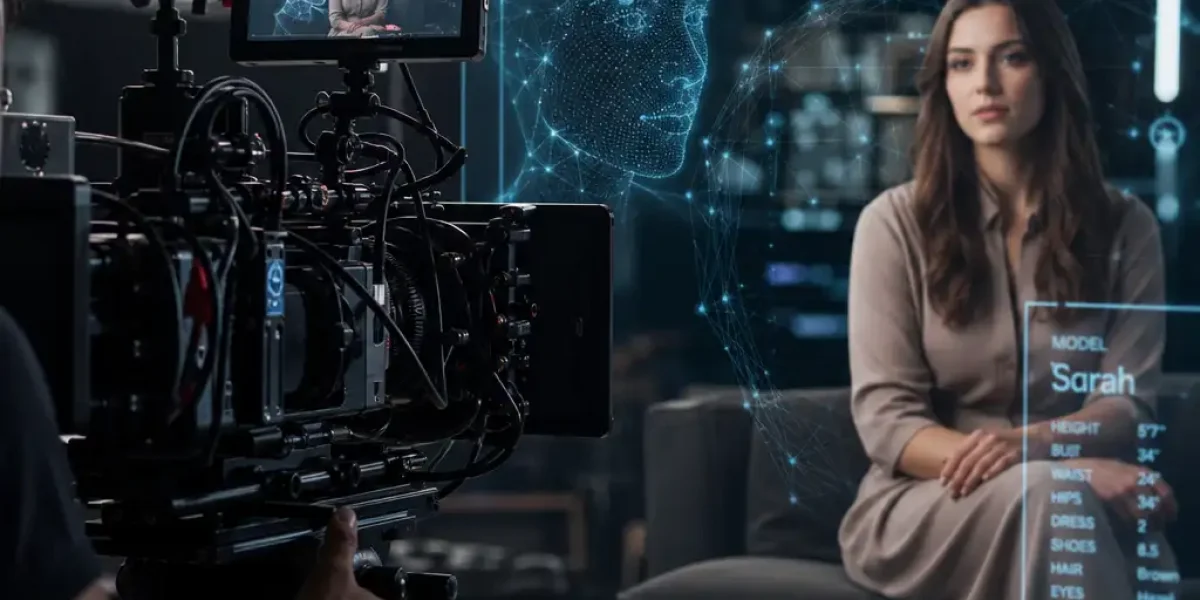
The rise of AI-generated content has also introduced important ethical and legal questions. Issues surrounding copyright ownership, content authenticity, and the responsible use of generated media continue to evolve as the technology advances. Deepfake technology, for example, has demonstrated both creative potential and significant risks, raising concerns about misinformation, public trust, and the manipulation of digital content.
There is also the danger of becoming overly dependent on automation. While AI can dramatically improve efficiency, relying too heavily on technology may reduce opportunities for creative experimentation and human problem-solving. Some of the most memorable moments in filmmaking and video production emerge from instinct, collaboration, and artistic vision—qualities that cannot be fully automated.
As AI becomes more deeply integrated into the industry, successful production teams will focus on using it as a supportive tool rather than a complete replacement for human expertise. Responsible implementation, ethical guidelines, and ongoing human oversight will be essential to ensuring that AI enhances the production process while maintaining the creativity, authenticity, and trust that audiences expect.
Human Creativity Continues to Lead the Process
Perhaps the most important reality is that AI remains a tool rather than a replacement for human creativity.
Storytelling, artistic vision, emotional connection, and cinematic decision-making still require experienced professionals. While AI can automate repetitive tasks, it cannot fully replicate the instincts of directors, cinematographers, camera operators, producers, and editors.
This is particularly true when capturing dynamic camera movement. Skilled operators using professional jib systems create visual experiences that depend on timing, creativity, and human judgment.
At MTJIBS, we believe the future of video production lies in combining innovative technology with expert craftsmanship. AI may improve efficiency, but exceptional storytelling will always rely on talented professionals who know how to bring stories to life.
Looking Ahead: The Future of AI in Video Production
The latest media technology trends suggest AI adoption will continue accelerating throughout the production industry. We can expect smarter editing systems, enhanced live-production capabilities, more sophisticated analytics, and deeper integration across production workflows.
However, the most successful productions will likely be those that use AI strategically while preserving the creative expertise that audiences value most.
As AI tools continue evolving, production companies that embrace innovation without losing sight of human creativity will be best positioned for long-term success.
Whether producing corporate videos, live events, documentaries, television broadcasts, or branded content, the combination of advanced technology and professional production equipment will continue defining the next generation of visual storytelling.
Frequently Asked Questions
How is AI used in video production?
AI is used throughout the production process, including script analysis, scheduling, shot organization, automated editing, caption generation, audience analytics, and live broadcast support. It helps improve efficiency while reducing repetitive tasks.
Can AI replace camera operators?
No. AI can assist with tracking, monitoring, and automation, but professional camera operators provide creative judgment, visual storytelling expertise, and dynamic camera movement that AI cannot fully replicate.
What are the benefits of AI editing tools?
Video editing AI tools help automate repetitive editing tasks, improve organization, generate transcripts and captions, enhance audio quality, and accelerate post-production workflows while allowing editors to focus on creative decisions.
Is AI being used in live broadcasts?
Yes. Modern AI broadcast technology is used in sports coverage, news production, and live events for automated tracking, content tagging, highlight generation, audience analysis, and production monitoring.
What is the future of AI film making?
The future of artificial intelligence film making will likely involve deeper integration of AI into planning, editing, analytics, visual effects, and production management. However, human creativity, storytelling, and artistic vision will remain central to successful productions.