Camera Movement for Concerts, Festivals & Awards Shows: What an Emmy-Winning Crew Uses
Concerts, festivals, and award shows don’t leave room for a second take. The lighting cue happens once, the artist hits their mark once, and the crowd only surges toward the stage one time per show. For a camera crew, that means the equipment, operators, and camera movement for concerts, festivals and award shows have to be flawless from the first frame — a very different bar than a controlled studio shoot or a corporate interview setup.
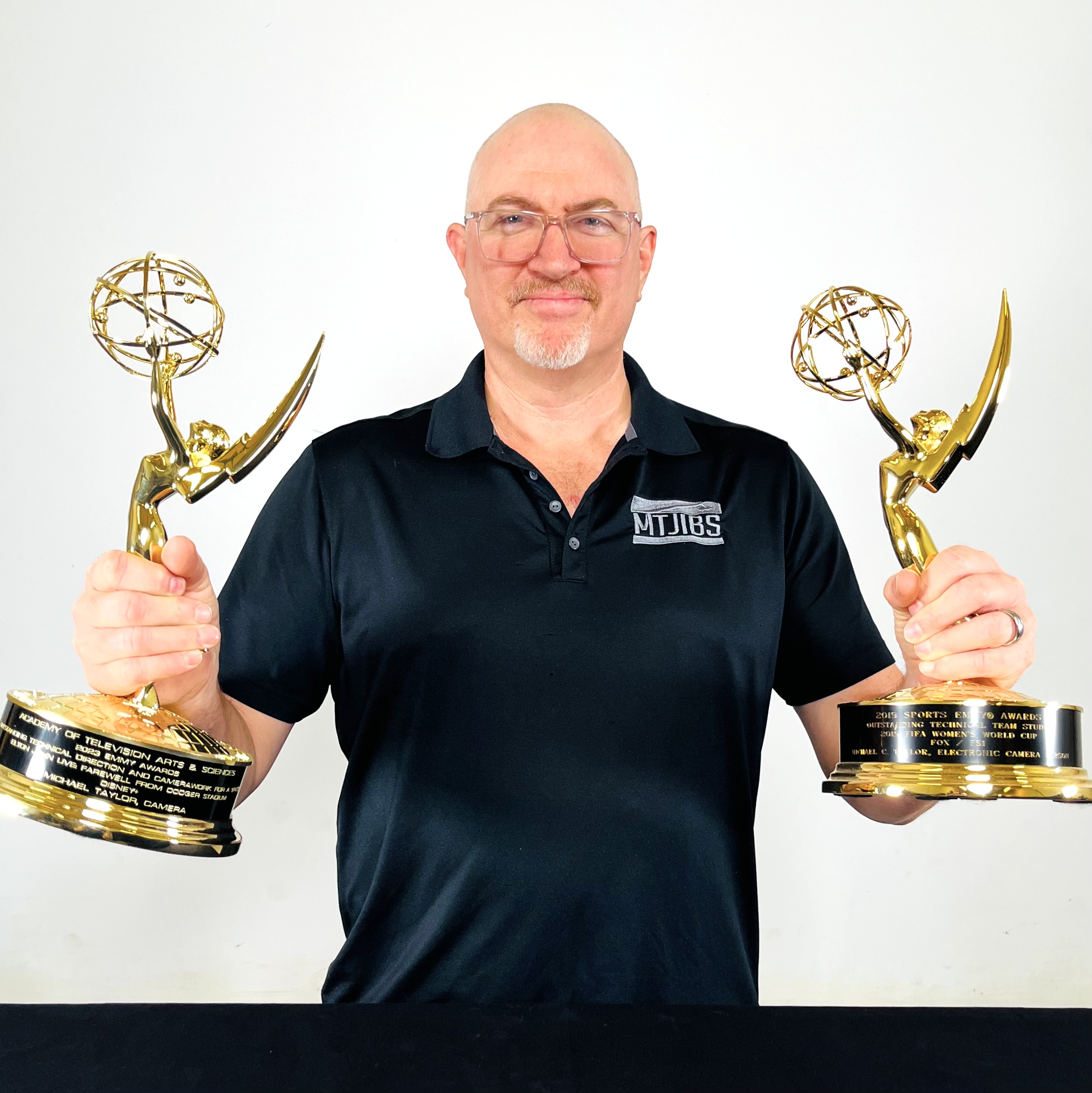
At MTJIBS, this is where two Emmy Awards and production credits with the Latin Grammy Awards, Univision, and the Food Network come from — live, high-pressure productions where camera movement has to be dynamic, dependable, and completely unobtrusive to the moment being captured. This guide breaks down what actually goes into filming a concert, festival, or awards show at a professional level, and what to look for when you’re booking camera movement equipment and crew for one.
Why Live Events Demand a Different Approach to Camera Movement
A corporate interview or a scripted commercial gives a crew the luxury of resetting a shot. A live concert, festival set, or awards broadcast does not. The camera operator has to anticipate where the moment is going before it happens, and the equipment has to be rigged to move fast, move smoothly, and move safely around performers, presenters, and a crowd.
That changes the equipment conversation. Instead of picking a single camera support for a controlled environment, live event productions typically need several systems working together: a camera jib or crane for sweeping establishing shots over a stage or crowd, a gimbal or Steadicam for operators moving through tight backstage or red-carpet spaces, and increasingly, a remote-operated head that can be mounted somewhere a human operator physically can’t stand. Choosing the right mix — and having a crew experienced enough to run it live — is what separates a show that looks broadcast-ready from one that looks like a home video with better lighting.
There’s also a logistics layer that a studio shoot doesn’t have to deal with: getting a clean signal off the camera and to a switcher or broadcast truck when the camera itself is moving through a crowd, mounted 30 feet above a stage, or tucked into a spot with no cable run available. That’s why wireless video transmission is such a routine part of live-event camera packages — it lets a jib, gimbal, or remote head feed a live signal back to production without a cable tether limiting where the camera can go.
The Core Equipment Live Events Actually Use
Every concert, festival, or awards show is different, but a few pieces of equipment show up again and again on MTJIBS live-event calls:
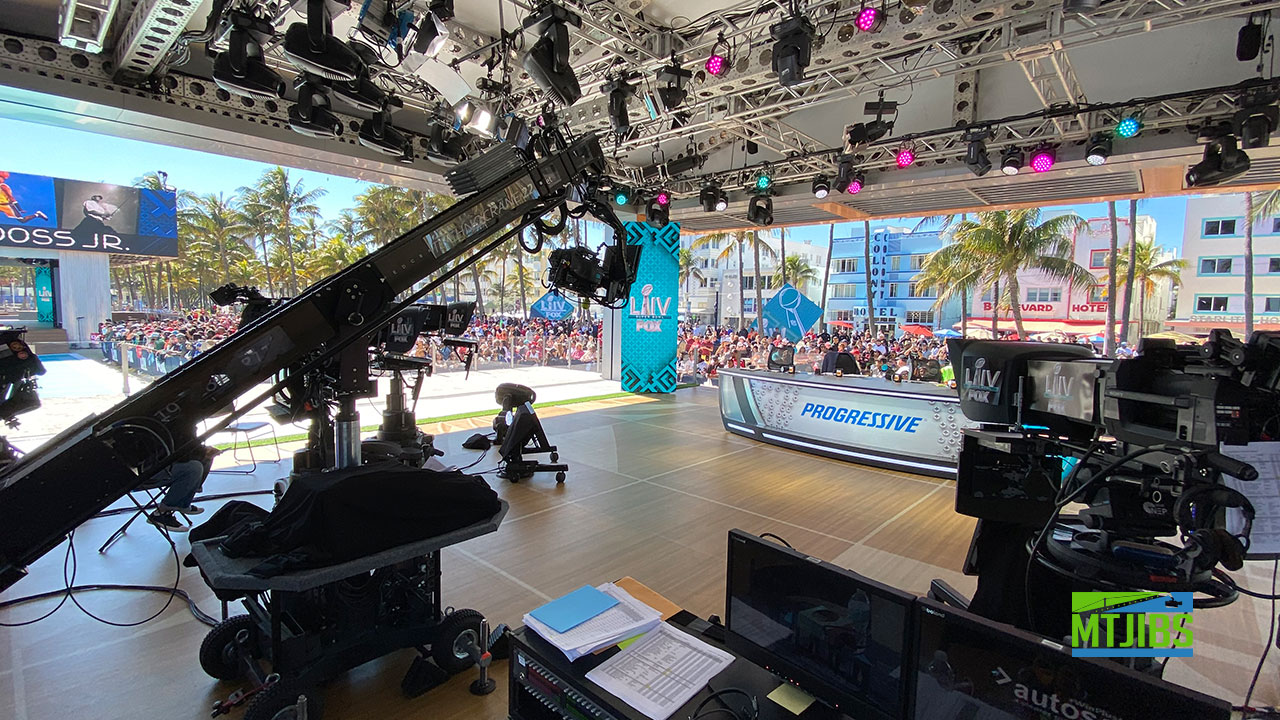
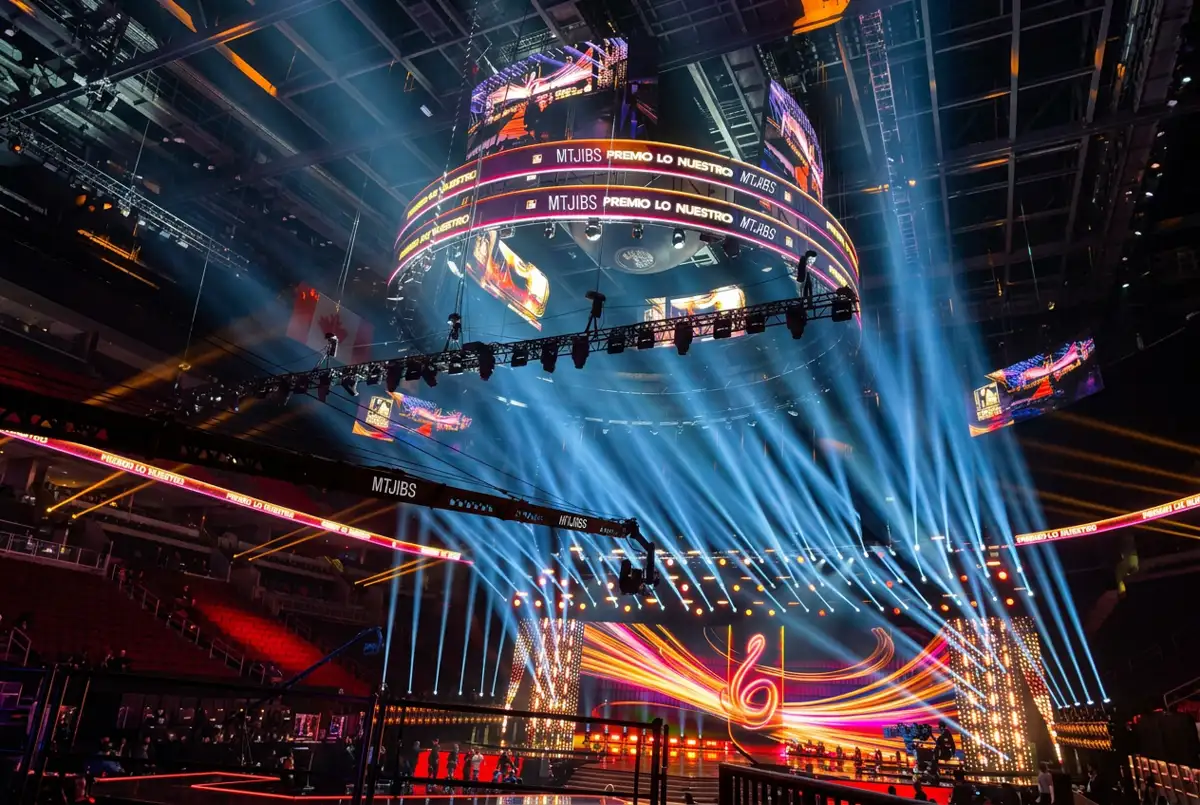
Camera jibs and cranes. A jib or a Technocrane gives a production the sweeping, elevated moves that turn a flat stage shot into something cinematic — rising over a crowd during a festival headliner’s entrance, or gliding across a red carpet as presenters arrive. These are the same moves we cover in more technical detail in our guide to choosing between a crane, jib, or gimbal, but on a live show, the operator doesn’t get to rehearse the exact moment — timing is everything.
Gimbals and Steadicams for movement through crowds. When a shot needs to move through a pit, backstage corridor, or a packed festival crowd, a mounted jib isn’t practical. That’s where a DJI Ronin 2 or a Steadicam comes in — both covered in more depth in Steadicam vs Gimbal: Which One Should You Rent? — giving an operator the freedom to walk with the action while keeping the frame smooth.
Remote and robotic camera heads. Awards shows and large festival stages often need a camera positioned somewhere a human operator can’t safely or physically be — rigged above a stage, mounted on a truss, or tucked into a spot with no room for a person and a full camera rig. A Mini Remote Head or a Tilta Nucleus-M wireless control system lets an operator run pan, tilt, and focus from a safe distance, opening up angles that simply aren’t available any other way.
Robotic dollies and stabilized long-lens systems. For festival stages that run wide across a field, or awards shows that need a smooth push down a long red carpet, a robotic dolly system adds repeatable, ultra-smooth movement without needing physical track laid through a crowd.
The Shots That Define Concert & Festival Coverage
So what is the best camera movement for concerts? Ask any live-event director what makes concert and festival footage feel professional, and it usually comes down to a handful of signature moves rather than a long list of equipment:
The crowd reveal. A jib or crane rising up and over the front rows as an artist walks onstage is one of the most recognizable shots in live music production — it sets the scale of the event in a single move and is almost always captured on a jib rather than a static camera.
The walk-and-talk. Backstage interviews, artist walk-outs, and red-carpet arrivals depend on an operator who can move fluidly with the subject. A gimbal or Steadicam keeps that motion smooth even through doorways, stairs, and crowded hallways where a wheeled dolly can’t go.
The impossible angle. Some of the most striking festival shots — looking straight down from a truss over a stage, or tucked into a spot the size of a shoebox at the edge of a platform — only exist because a remote head lets an operator control the camera from somewhere else entirely.
Knowing which of these shots a specific event calls for — and having the equipment and operators to execute all three in the same show if needed — is what a live-event camera plan is really built around.
What Awards Shows Require That Concerts Don’t
Concerts and festivals are built around energy — the camera work needs to match the crowd’s excitement and move with the performance. Awards shows run on a different clock entirely. Everything is timed to a live broadcast: presenters have marks to hit, categories have fixed run times, and a camera operator missing a reaction shot doesn’t get a second chance because the show is airing in real time.
That means awards show camera work leans more heavily on precision and multi-camera coordination — a jib or robotic head has to be positioned to catch both the stage and specific seats in the audience, switched between cleanly, and framed to broadcast standards the entire time. It’s a different discipline from festival coverage, even though a lot of the same equipment is involved, and it’s exactly the kind of high-stakes, zero-margin-for-error work that earned MTJIBS its Emmy recognition.
Behind the Scenes: A Track Record Built on Live Production
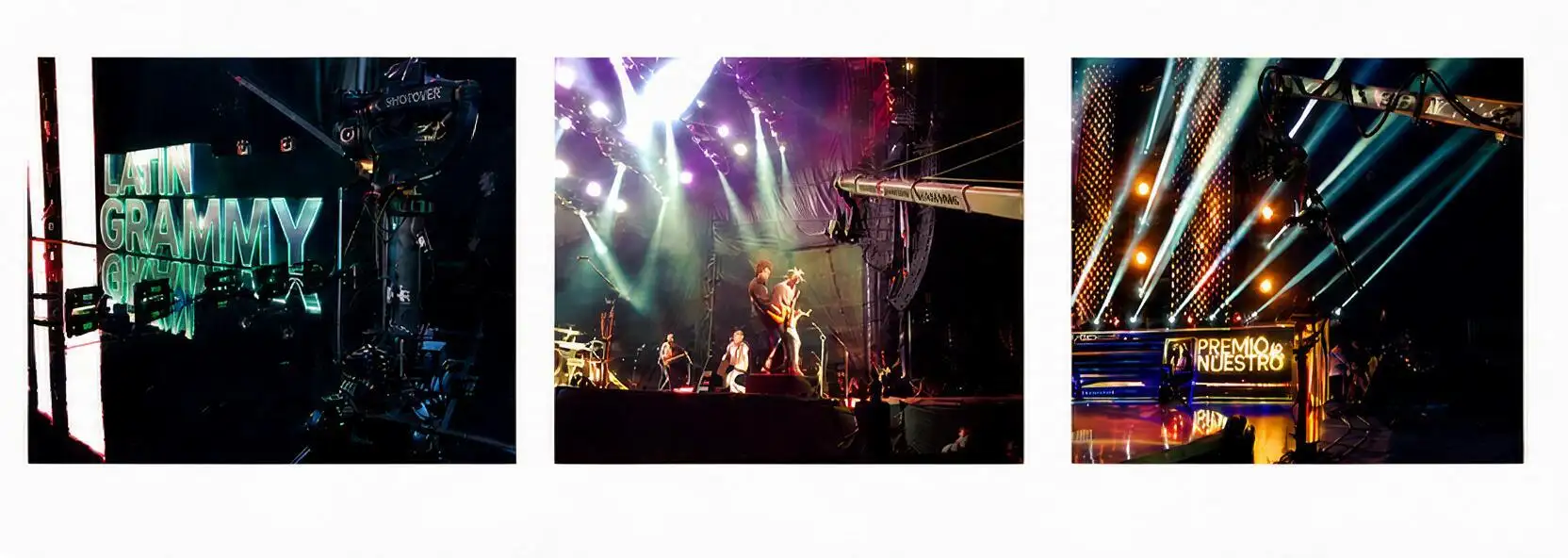
MTJIBS crews and equipment have been part of some of the most recognized live productions in South Florida and beyond, including work with the Latin Grammy Awards, Univision, and the Food Network — productions where the audience is watching live and there’s no opportunity to reshoot a missed moment. That track record is also reflected in two Emmy Awards earned for camera and production work.
What that experience translates to on a live event isn’t just knowing how to operate a jib or a remote head — it’s knowing where to position that equipment before the moment happens, how to move a crew through a crowd without disrupting the show, and how to hand off coverage seamlessly when a broadcast is cutting between multiple cameras in real time. That’s the part of the job that doesn’t show up on an equipment spec sheet.
Planning a Concert, Festival, or Awards Show Shoot
Booking camera movement equipment for a live event looks different than booking it for a studio day. A few things worth planning around:
Load-in and rigging time. Cranes, jibs, and remote heads mounted above a stage or truss need time to rig and test safely before doors open or a broadcast goes live — this needs to be built into the production schedule, not squeezed in at the end.
Crowd and safety coordination. Moving a jib, dolly, or operator through an active crowd requires coordination with venue security and stage management, which is part of why experienced crews matter as much as the gear itself.
Redundancy for live moments. Because there’s no reshoot on a live show, productions often run more than one camera movement system simultaneously — a jib covering the wide shot while a gimbal operator works the crowd, for example — so no single angle is a single point of failure.
Full crew vs. equipment-only. Live events are one of the clearest cases where renting equipment with an experienced operator, rather than gear alone, makes the difference between a show that looks professionally broadcast and one that doesn’t.
Why Experience Matters as Much as the Equipment
Any production company can list a jib, a gimbal, or a remote head on a rental sheet. What’s harder to replicate is a crew that has actually run that equipment on a live broadcast, knows how a festival crowd moves, and has stood on enough red carpets and awards stages to know where the next moment is going to happen. That’s the difference an Emmy-winning crew brings to a concert, festival, or awards show — not just access to the gear, but the judgment to use it at the right moment.
If you’re planning camera coverage for a concert, festival, or awards show, get in touch with the MTJIBS team to talk through the right equipment and crew for your production, or browse the full equipment catalog to see everything available for your next live event.
FAQ: Camera Movement for Concerts, Festivals & Awards Shows
What kind of camera equipment is used to film concerts and festivals?
Concert and festival coverage typically combines a camera jib or crane for sweeping stage and crowd shots, a gimbal or Steadicam for operators moving through the crowd or backstage, and sometimes a remote camera head for angles a human operator can’t reach. The exact mix depends on the venue, stage size, and how the footage will be used.
Do awards shows need different camera equipment than sports broadcasts?
The equipment overlaps — jibs, cranes, and robotic heads are common to both — but awards shows require tighter timing and multi-camera coordination since presenters, categories, and segments are run on a fixed broadcast clock with no opportunity to reshoot a missed moment.
What experience does MTJIBS have filming major award shows and concerts?
MTJIBS crews and equipment have supported live productions including the Latin Grammy Awards, Univision, and the Food Network, and the team’s camera and production work has earned two Emmy Awards.
Can a jib or robotic camera system operate safely in a live concert crowd?
Yes, when it’s planned and coordinated properly. Moving a jib, dolly, or camera operator through an active crowd requires coordination with venue security and stage management, along with an experienced crew that knows how to work around the audience without disrupting the show.
How do I book a camera crew for a festival or awards show production?
Contact the MTJIBS team with your event date, venue, and coverage needs, and they’ll help determine the right combination of camera movement equipment and crew for your production.
How far in advance should I book camera equipment for a concert or awards show?
Live events with rigging, truss-mounted cameras, or remote heads typically need equipment confirmed several weeks ahead so there’s time to plan load-in, safety checks, and crew scheduling around the venue’s production timeline. Booking earlier also ensures the specific gear — a jib, crane, gimbal, or remote head — is available for your event date.