
Broadcast Lens Guide: 7 Essential Choices Before You Rent Zoom Glass for a Flawless Live Show
Pick the wrong broadcast lens and a perfectly operated jib move still lands on the wrong frame: too tight at the end of the arm, too slow to zoom, or simply unable to mount on the camera you booked. The glass on the front of the camera decides what every movement shot can actually show, yet it is often the last line item a producer thinks about.
This guide walks through the seven choices that matter most before you rent zoom glass for a live show, concert, sports event or awards broadcast. Whether you are a producer, technical director, DP or camera operator, you will come away knowing which questions to ask, which numbers to read on the lens barrel, and how to match a lens to a jib, crane or POV position without surprises on show day.
What Is a Broadcast Lens? Zoom Ratio, Focal Length and B4 Mount Explained
A broadcast lens is a zoom lens built for television-style cameras, most often bodies with three 2/3-inch sensors and a B4 bayonet mount. Unlike a still-photo zoom, it is designed to be operated live: the zoom and focus are driven by servo motors, the iris can be controlled remotely from the video shader’s position, and the optical design keeps focus steady as the operator zooms in and out.
Three specifications define almost every broadcast lens:
- Zoom ratio – how many times longer the longest focal length is than the widest (for example 14x, 22x or 94x).
- Widest focal length – the number in millimeters that tells you how wide the shot can go, which is critical when the camera is close to the action.
- Mount – the B4 mount is the long-standing standard for 2/3-inch broadcast cameras, which is why “b4 lens” is a common search when crews plan a camera package.
Lens choice is an especially active conversation this year. Fujifilm announced that its new FUJINON UA94x8.7BESM 4K box zoom (8.7–818mm) would begin shipping in mid-October 2026 for sports, large events and concerts, according to the Fujifilm Americas newsroom. Portable 4K zooms such as the UA22x4.8 also reached the market around NAB Show 2026, so rental inventories are changing quickly.
1. Box Lens vs Portable ENG-Style Zoom: Matching Glass to the Camera Position
The first decision is the physical class of broadcast lens. A box lens is a large, long-range studio or stadium zoom housed in a rectangular body. It sits on a heavy pedestal or tripod at the back of a venue and can reach a performer’s face from hundreds of feet away. These lenses are superb for long shots, but they are far too heavy for a jib arm or a Steadicam rig.
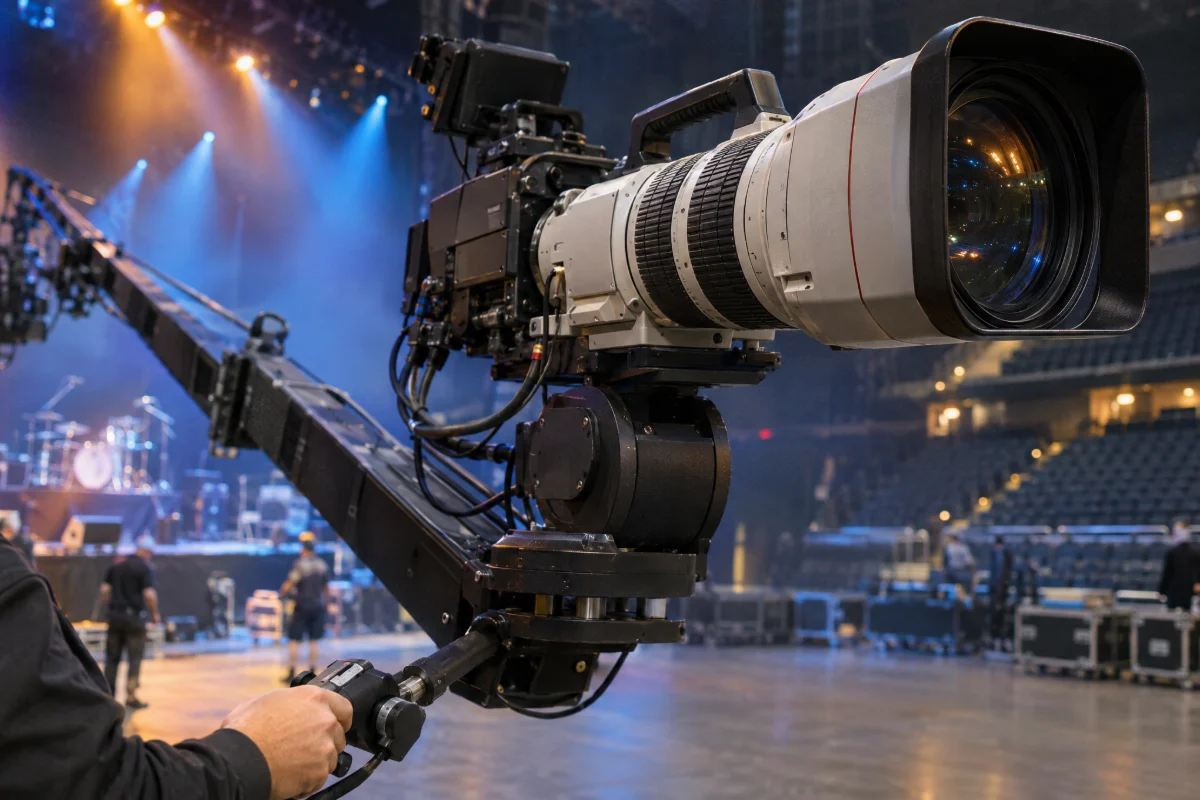
A portable ENG-style zoom is compact enough to sit directly on the camera body. It is the lens you will see on shoulder cameras, handhelds, jibs, cranes, rail cams and many POV positions. For camera movement work, a portable zoom is almost always the right answer because it keeps the payload light and balanced, which protects the smoothness of every move.
A simple rule: if the camera moves, think portable. If the camera stays put and needs to reach across a stadium, think box lens. Many live productions use both, with box lenses on hard cameras and portable glass on every camera jib for live production.
2. Reading the Name: What 14×4.3 and 17-120mm T2.95 Actually Tell You
Broadcast lens model names look cryptic, but they are a quick spec sheet. On a broadcast zoom, the first number is the zoom ratio and the second is the widest focal length. A 14×4.3 lens zooms 14 times from 4.3mm, so its range runs from 4.3mm to roughly 60mm. A 22×4.8 runs from 4.8mm to about 106mm, and a 94×8.7 box lens reaches from 8.7mm all the way to 818mm.
Cinema-style servo zooms are named differently. A Canon Cine-Servo 17-120mm T2.95 lists the focal range directly and then the T-stop, which measures how much light actually reaches the sensor. A lower T-stop means a faster lens that performs better in dim venues.
Watch for letters as well. Many broadcast lenses include a built-in extender (often marked “ex” or “E”), which doubles the focal length at the push of a lever. It is a great way to get a tighter shot from the same lens, but it costs light, so plan for it in low-light shows.

3. Why Wide-Angle Zooms Rule Jib, Crane and POV Positions
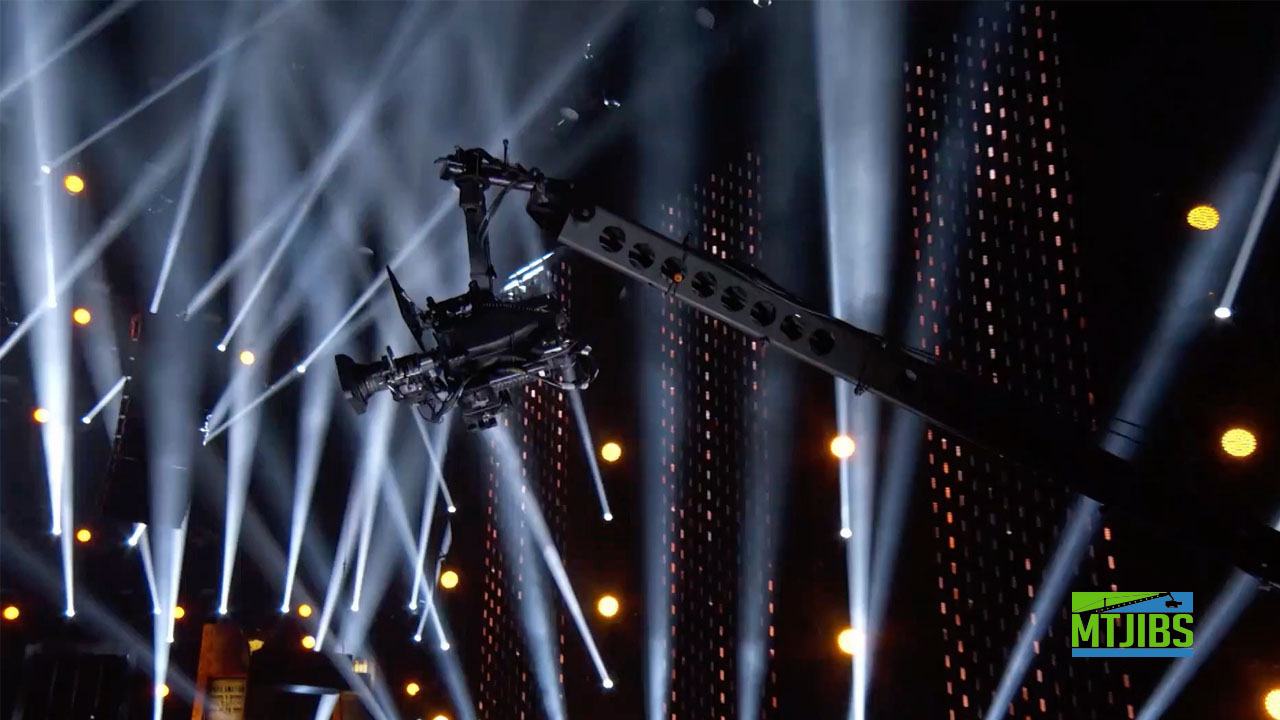
On a jib or crane, the camera often sits only a few feet from the performer, the host or the stage edge. A long lens at that distance gives you a frame full of eyebrow. That is why wide-angle zooms such as the Canon HJ14ex4.3B are a favorite at the end of the arm. The wide end lets the operator hold a sweeping establishing shot, then push in to a mid-shot without ever needing to reach the camera.
Wide glass is also more forgiving. Small vibrations and minor focus errors are far less visible at 4.3mm than at 60mm, which helps keep big crane moves clean during fast-paced live broadcasts. For a deeper look at choosing the right arm, see our guide to camera crane vs jib vs gimbal.
The right broadcast lens for a jib depends on three things: arm length, the distance from the camera to the subject, and the shot list. A 12-foot jib working a talk-show desk needs a very different focal range than a 40-foot Technocrane sweeping across a festival crowd.
4. Broadcast Zoom vs Cine-Servo: Live Look or Cinematic Look?
More live shows now mix classic 2/3-inch broadcast cameras with large-sensor cinema bodies to get a shallower, more filmic look. That raises a key question: should you rent a traditional broadcast lens or a cine-servo zoom?
- Broadcast zoom (B4) – huge zoom ranges, deep depth of field that keeps fast action sharp, and familiar servo controls. Ideal for sports, news and multi-camera live production.
- Cine-servo (PL or EF) – designed for Super 35 sensors, with a shallower depth of field and a softer background. Ideal for concerts, award shows and branded events that want a cinematic feel.
Can a broadcast lens be used on a cinema camera? Sometimes. A B4 lens is designed for a 2/3-inch sensor, so on a Super 35 or full-frame body it needs an adapter and often a sensor crop, and image coverage varies by model. Always confirm the exact camera, adapter and lens combination with your rental house before the shoot. Our article on camera movement for concerts and awards shows shows how crews blend both looks in one program.
5. Before You Rent: Will the Lens Mount Fit Your Camera and Remote Head?
Mount compatibility is the most common and most expensive mistake. A B4 broadcast lens fits 2/3-inch system cameras directly. Many cinema cameras use PL, EF or E-mount instead, and some newer system cameras with large sensors can accept B4 glass only through an adapter or a dedicated mode. Before you lock the order, confirm:
- The exact camera model and its native mount. If you are unsure of a standard, the overview of lens mounts on Wikipedia is a useful starting point.
- Whether an adapter is required and whether it passes lens data and power.
- The combined weight and length of camera plus lens, so the jib or crane can be balanced correctly.
- Whether the remote head has enough clearance for the lens barrel during full pan and tilt.
Remote heads are where these details bite. A lens that is a few inches too long can hit the head’s frame at the bottom of a tilt, and an unbalanced load makes smooth, slow moves almost impossible. Share the full camera package with your movement provider early so they can plan counterweights and cabling.

6. Before You Rent: Which Zoom and Focus Controls Does Your Operator Need?
On a hand-held or shoulder camera, the operator zooms with a rocker on the lens grip. On a jib or crane, the camera is out of reach, so the operator needs servo zoom and focus demands mounted on the back of the arm or on the pan bars. Ask your rental house these questions:
- Does the lens have a full servo drive unit for both zoom and focus, or zoom only?
- Which demand units are included, and do they connect to the lens directly or through the remote head?
- Will the remote head control the lens, or will separate cables run down the arm?
- Can the zoom speed curve be adjusted for slow, creeping pushes as well as fast snaps?
Also ask about lens ramping, sometimes called f-drop. On many zoom lenses, the maximum aperture gets smaller as you zoom toward the long end, so the picture darkens slightly mid-move. Shaders can compensate with iris and gain, but it is worth knowing which lenses ramp and when, especially in dark concert lighting.
7. Plan the Whole Broadcast Lens Package With Your Movement Crew
The best results come when the broadcast lens, camera body and movement gear are planned together rather than booked from three separate lists. Build a simple position sheet for each camera that lists the camera model, lens, mount, required controls, arm length and the main shots expected from that position. It takes thirty minutes and saves hours of troubleshooting on load-in day.
Bring that sheet to your camera and movement provider early. If you are still deciding between renting and owning, our breakdown of renting camera equipment vs buying and our tips on how to choose a camera rental service will help. For multi-day shows, the checklist in our multi-day equipment planning guide keeps spare lenses, adapters and demands on the packing list.
Frequently Asked Questions About Broadcast Lenses
What is a broadcast lens?
A broadcast lens is a zoom lens built for television-style cameras, usually 2/3-inch sensor bodies with a B4 mount. It offers a wide zoom range, a constant working distance and servo zoom and focus control so an operator or remote head can change framing smoothly during a live show.
What is the difference between a box lens and an ENG-style lens?
A box lens is a large, long-range studio or stadium zoom that sits in a housing on a heavy pedestal or tripod. A portable ENG-style zoom is compact and light enough for shoulder, jib, crane or Steadicam use. Most camera-movement positions use portable wide zooms.
What does 14×4.3 mean on a lens?
The first number is the zoom ratio (14x) and the second is the widest focal length (4.3mm). A 14×4.3 lens therefore zooms from 4.3mm to about 60mm. That wide end is why lenses like the Canon HJ14ex4.3B are popular on jibs, where the camera sits close to the action.
Can a broadcast lens be used on a cinema camera?
Sometimes. A B4 broadcast lens is designed for 2/3-inch sensors, so on Super 35 or full-frame cinema bodies it needs an adapter and often a sensor crop, and image coverage varies by model. Confirm camera, adapter and lens compatibility with your rental house before the shoot.
Which lens works best on a camera jib or crane?
Most jib and crane positions favor a wide-angle zoom with servo control, so the operator can hold a wide establishing frame and push in without reaching the camera. The right focal range depends on arm length, distance to the subject and whether the remote head supports lens control.
Get the Right Broadcast Lens on Every Move
A great camera move is only as good as the frame it delivers. By choosing the right lens class, reading the zoom ratio correctly, matching wide glass to jib and crane positions, and confirming mounts and controls before you rent, you set your crew up for clean, confident shots from rehearsal to air. When your broadcast lens and movement gear are planned as one system, show day gets a lot calmer.
Planning a live show, concert or sports broadcast? The Emmy-winning MTJIBS team can help you match jibs, cranes, remote heads and lens controls to every camera position. Contact MTJIBS to talk through your next production, or browse our camera movement equipment.