Choosing the Right Camera Support Rig for Your Crew Size
When delivering flawless camera movement on high-pressure productions, one truth consistently holds: the best camera support rig is the one that matches your crew size, production demands, and operating experience. Camera movement is not just a technical decision—it’s a strategic one. The wrong choice can slow down production, introduce safety risks, or limit creative execution. The right choice enhances storytelling, improves efficiency, and ensures every shot is executed with confidence and precision.
Every production environment presents different challenges. A small, agile crew covering a music video or branded shoot has very different needs than a full broadcast team executing live camera moves for a sporting event, concert, or awards show. Choosing the wrong camera support can slow down workflows, overextend operators, or compromise shot consistency. Choosing the right one allows crews to move with confidence, maintain creative control, and stay on schedule—even when conditions change quickly.
At MTJIBS, we approach camera movement as a complete system: professional-grade jibs, dollies, cranes, gimbals and more paired with experienced operators who understand production pressure, live timing, and collaborative execution. The goal is always the same—deploy the right tool, with the right expertise, to support the creative vision without introducing unnecessary complexity.
Key Takeaways
- Camera movement is a strategic choice, not just a technical one.
- The right rig depends on crew size, production type, and pace.
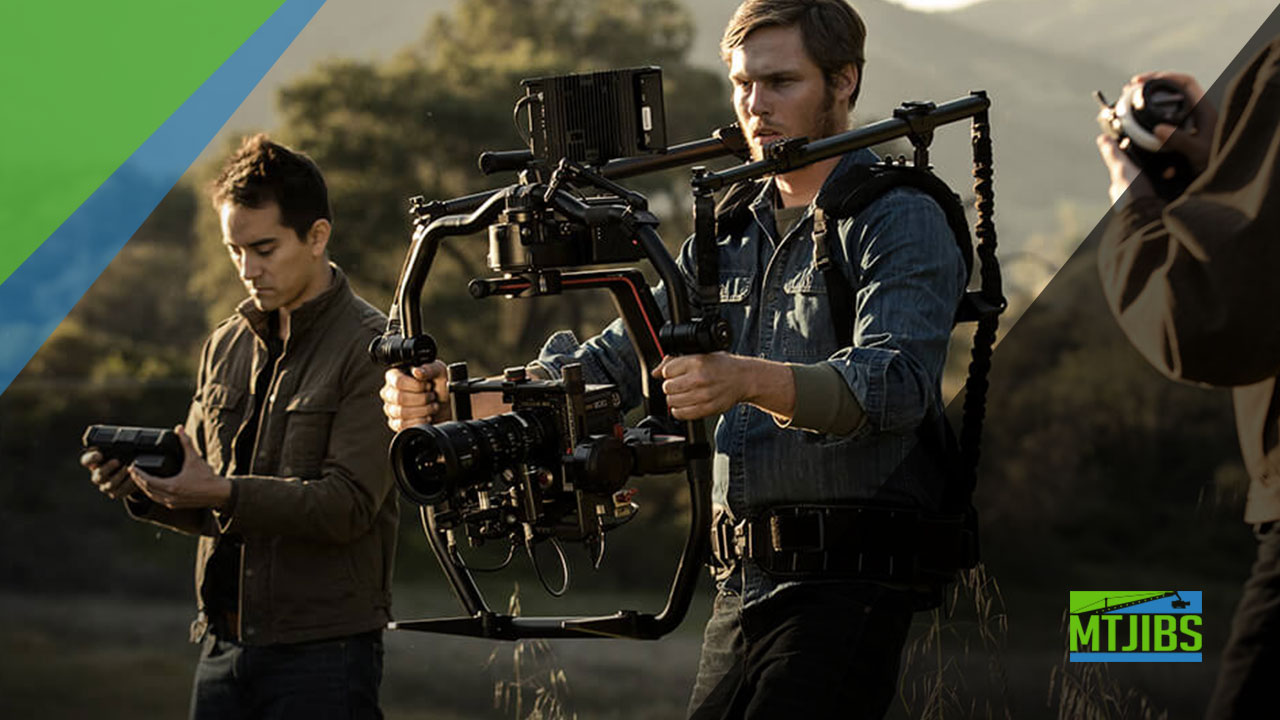
- Small crews benefit from gimbals for speed and flexibility.
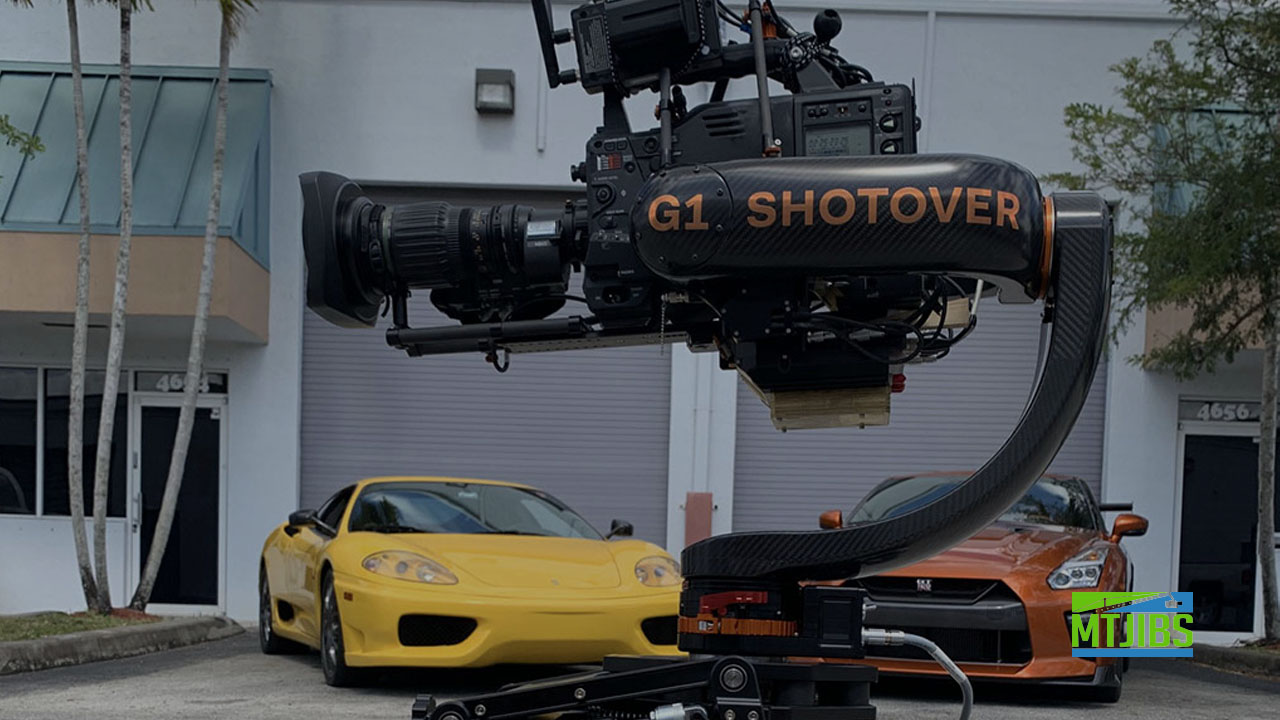
- Larger crews unlock jibs, cranes, and dollies for cinematic, repeatable motion.
- Using the wrong gear can slow production, increase risk, and limit creativity.
- Renting with experienced operators (like MTJIBS) ensures efficiency, safety, and higher production value.
Table of Contents
Why Your Crew Size Affects Gear Selection
Crew size directly impacts which camera support rig will perform best on your production. Camera movement systems are inherently collaborative, and when the scale of the gear doesn’t align with the size or experience of the crew, issues surface quickly. The wrong match can lead to workflow inefficiencies, missed shots, increased safety risks, and unnecessary costs—especially in live or time-sensitive environments.
Several critical production factors are influenced by crew size, including:
- Setup and breakdown time, which affects how quickly a production can move between locations or reset for live cues
- Shot repeatability and consistency, particularly important for rehearsed moves, broadcast timing, and multi-camera coordination
- Safety and equipment control, ensuring heavy or elevated systems are operated correctly and responsibly
- Mobility during live or fast-paced events, where the ability to reposition quickly can determine whether a moment is captured or missed
- Communication between directors, operators, and camera teams, which becomes increasingly important as gear complexity increases
A smaller crew often benefits from lighter, more mobile solutions that allow for speed and flexibility without overextending personnel. In contrast, a full production team can effectively support larger, more sophisticated camera support systems—such as jibs or dollies—that deliver elevated production value, greater shot precision, and more cinematic movement when operated by experienced professionals.
Best Camera Support Gear by Crew Size: Gimbals, Jibs, Cranes & More
Camera support systems are not one-size-fits-all. Each option—gimbals, jibs, cranes, and dollies—serves a specific purpose depending on crew size, production format, and the level of movement required.
Understanding the strengths and limitations of each system helps production teams choose equipment that enhances efficiency, safety, and visual impact rather than complicating the workflow.
Gimbals
Best camera support for: Solo operators and small crews (1–2 people)
Gimbals are designed for speed, flexibility, and movement in environments where traditional support systems are impractical. They excel when crews need to stay mobile and react quickly to changing action.
Pros:
- Lightweight systems that allow rapid movement through locations
- Fast setup and minimal footprint, ideal for tight or crowded spaces
- Smooth stabilization while tracking moving subjects
Cons:
- Operator fatigue becomes a factor on long shoot days or extended live coverage
- Limited vertical movement and less repeatability compared to jibs or dollies
MTJIBS Use Cases:
- Music videos requiring fluid, continuous motion
- Branded content and social campaigns
- Behind-the-scenes and event coverage
- Run-and-gun documentary production
Jibs & Cranes
Best camera support for: Medium to large crews and live productions
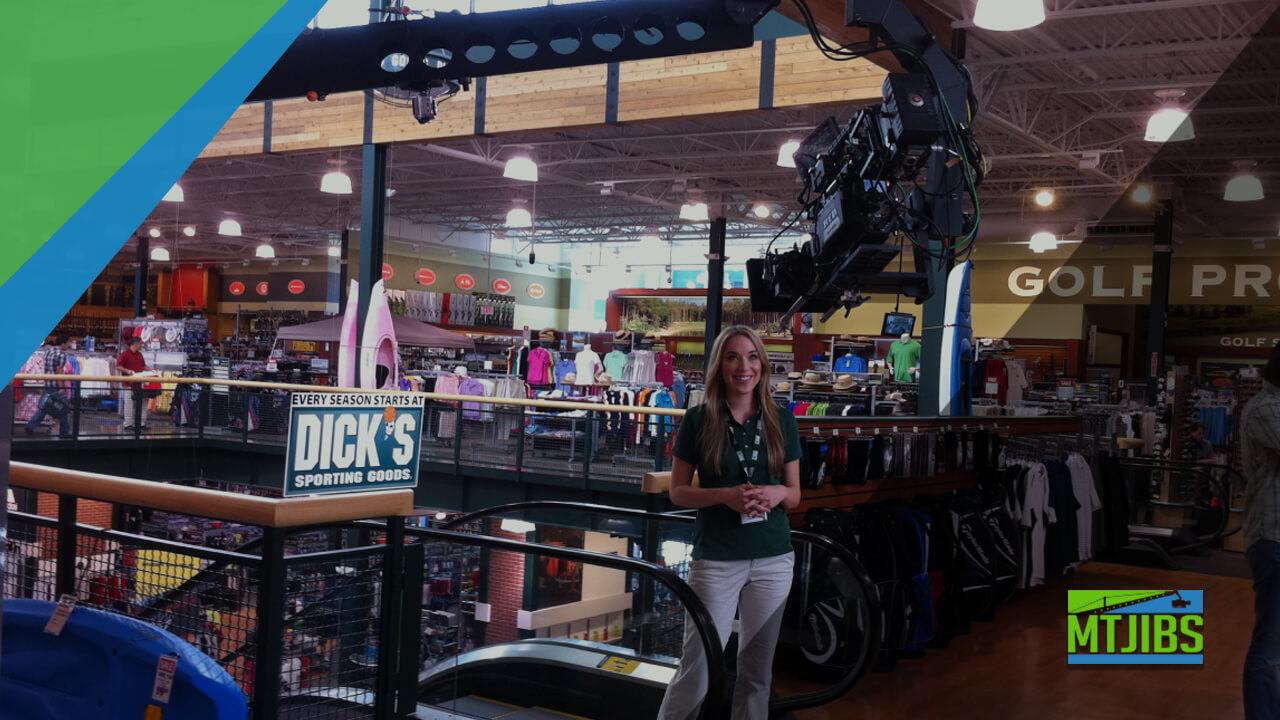
Jibs and cranes deliver controlled, cinematic movement that elevates production value. These systems require coordination and experience but provide visual perspectives that smaller rigs simply cannot achieve.
Pros:
- Sweeping camera moves that add scale and drama
- Elevated angles for crowd, stage, or field-of-play coverage
- Consistent, repeatable motion essential for live broadcast and rehearsed cues
Cons:
- Requires space planning and coordination with other departments
- Must be operated by experienced professionals for safety and precision
MTJIBS Use Cases:
- Live sporting events and arena coverage
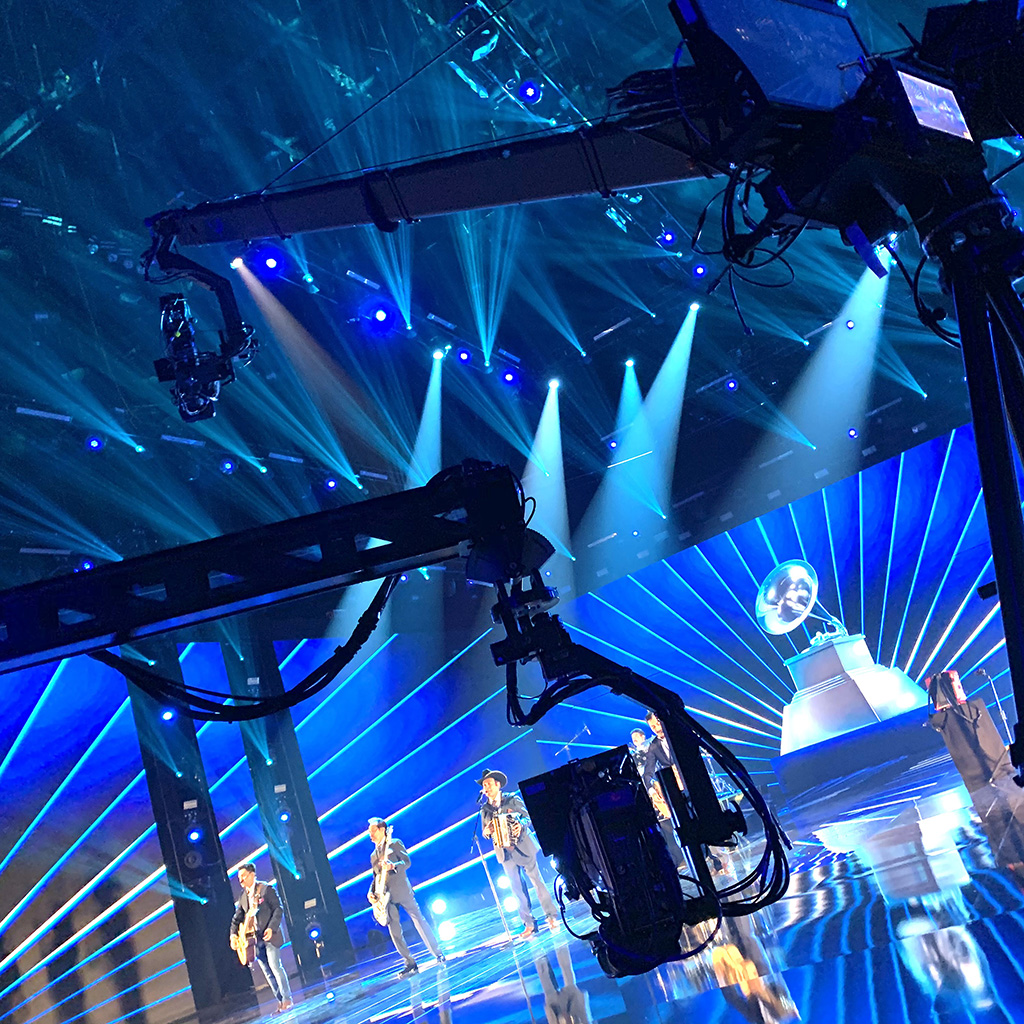
- Awards shows with rehearsed camera cues
- Concerts and large-scale performances
- Broadcast television and live-to-air productions
Dollies & Track Systems
Best camera support for: Structured productions and controlled environments
Dollies provide precision and consistency, making them ideal for productions where framing and timing must be exact. They perform best when blocking and camera paths are clearly defined.
Pros:
- Exceptionally smooth lateral and push-in movement
- Precise control for interviews and narrative scenes
- Repeatable shots that match director and broadcast timing requirements
Cons:
- Longer setup and strike time compared to mobile systems
- Limited flexibility once track placement is locked
MTJIBS Use Cases:
- Commercial and branded film production
- Studio interviews and panel discussions
- Feature and narrative content
- Live television segments requiring controlled movement
Camera Rig Comparison by Crew Size
Crew Size | Recommended Camera Support Rig | Ideal Production Types |
1–2 people | Gimbal system | Music videos, social content, documentaries |
2–3 people | Compact jib or gimbal | Corporate events, branded video |
4–6 people | Jib + handheld/gimbal | Concerts, mid-scale live events |
Full team | Jib, crane, dolly combo | Sports, awards shows, broadcast TV |
Recommended Setups by Production Type
Different production formats demand different approaches to camera movement. Live environments prioritize reliability and timing, while pre-produced shoots allow for more controlled, cinematic execution. Matching the right camera support setup to the production type ensures crews can capture critical moments without compromising safety, efficiency, or visual quality.
Live sporting events typically rely on a full-size jib or crane paired with supplemental gimbal coverage, allowing for sweeping field-of-play shots alongside dynamic sideline and player movement. Jibs deliver scale and context, while gimbals provide agility—both operated by MTJIBS professionals trained in live broadcast timing and safety protocols.
Live awards shows benefit from a jib with an experienced operator complemented by a dolly for stage-level tracking, ensuring smooth, repeatable movement for rehearsed cues, presenter walk-ups, and live-to-air moments where precision is critical.
Concerts and music festivals often combine a jib for wide crowd and stage reveals with gimbal systems for backstage and artist coverage, striking a balance between cinematic movement and fast repositioning during live performances.
Music videos and commercial shoots commonly utilize a gimbal for fluid, continuous motion paired with a dolly for controlled narrative shots, giving smaller or mid-sized crews the flexibility to move quickly while still achieving polished, high-end visual storytelling.
Production Gear Rental vs. Owning Camera Support Gear
Owning camera support equipment can make sense in limited scenarios—typically when you use the same rig consistently, have trained operators on staff, and have already accounted for storage, maintenance, transportation, and long-term upkeep in your budget. For some in-house teams, ownership provides familiarity and availability, but it also comes with ongoing operational costs that are often underestimated.
Owning camera support equipment makes sense only if:
- You use the same rig consistently
- You have trained operators on staff
- Storage, maintenance, and transport are built into your budget
When you rent camera support gear from MTJIBS, productions benefit from:
- Access to multiple camera support rigs tailored to different production types
- Experienced operators included, reducing risk and setup time
- No long-term maintenance or storage costs
- Scalable solutions per production, allowing teams to adjust gear based on crew size and creative needs
For productions that shift between live events, commercial shoots, and broadcast environments, renting ensures flexibility while maintaining professional execution—without the hidden costs that often come with ownership.
Curious how renting compares to owning in terms of cost, flexibility, and efficiency? Check out our detailed blog on the true costs of renting vs. owning camera gear to see why renting might be the smarter choice for your next project.
How Crew Size Impacts Setup Time and Mobility
Crew size has a direct impact on how quickly camera support systems can be deployed and how easily they can be moved during production:
- Small crews benefit from lightweight, mobile solutions such as gimbals or compact rigs, which allow for rapid setup, repositioning, and shooting in tight or dynamic environments. These setups maximize speed and flexibility but may limit the scale of shots achievable.
- Mid-size crews can effectively handle portable jibs, short dolly tracks, or hybrid setups, balancing setup time with increased production value. This size crew can capture more complex camera moves while still maintaining agility between setups, making them ideal for mid-scale live events, branded content, and narrative shoots.
- Large crews can manage full-size jibs, cranes, and extended dolly tracks, which require longer setup and strike times but deliver highly cinematic, repeatable, and complex shots. These rigs provide the production value expected in live broadcasts, concerts, or large-scale film shoots.
At MTJIBS, our experienced operators streamline setup and strike for all crew sizes, ensuring equipment is deployed efficiently, safely, and on schedule. This expertise is especially critical in live or high-pressure environments, where timing, coordination, and mobility can make the difference between capturing the perfect shot and missing it entirely.
Top Questions to Ask When Booking Camera Support Rentals
Before booking, make sure to ask these key questions to keep your production safe, efficient, and on schedule:
- Is an experienced operator included? – Ensures smooth shots and safe rig operation.
- How many crew members are required? – Prevents understaffing and delays.
- What setup and strike time should we plan for? – Keeps your schedule realistic.
- Is this rig suitable for live broadcast? – Guarantees reliability for live events.
- Can it integrate with our existing camera package? – Avoids technical conflicts on set.
Frequently Asked Questions (FAQs)
For small crews, a gimbal system is typically the best camera support rig due to its mobility, fast setup, and minimal footprint. It allows a single operator or a duo to achieve professional, stabilized shots without the complexity of larger systems.
A gimbal is usually better for a small crew. Dollies require more setup time and coordination, while gimbals allow for quick, flexible movement. This makes gimbals ideal for run-and-gun shoots, tight spaces, or fast-changing locations.
efficient, and professional execution. This allows your team to focus on creative direction rather than managing the technical operation of the rig.
Absolutely. MTJIBS specializes in live sporting events, concerts, award shows, and broadcast productions. Our operators are trained to handle high-pressure, time-sensitive environments while maintaining smooth and precise camera movement.
Selecting the right rig depends on crew size, location, and the type of shots required. MTJIBS can consult with your team to match equipment to your production needs, ensuring the right balance of mobility, repeatability, and cinematic quality.
Yes. Many of our gimbals, compact jibs, and portable dollies are designed for flexibility and can navigate tight or challenging locations. Our operators are skilled at adapting setups to maximize shot potential while maintaining safety.
MTJIBS can provide hybrid setups, combining gimbals, jibs, cranes, and dollies as needed. Our operators coordinate across systems to capture complex sequences without slowing down the production workflow.
Expert Help: Matching Gear to Your Production Team
Selecting the right camera support rig is a strategic decision—not just a technical one. The right choice affects shot quality, crew efficiency, safety, and overall production success. At MTJIBS, we pair professional-grade camera movement gear with seasoned operators who understand the nuances of live environments, director intent, and the high-pressure demands of modern productions.
Whether you’re planning a concert, sporting event, awards show, or commercial shoot, our team works closely with you to evaluate your crew size, production goals, and creative vision, ensuring you have the ideal combination of equipment and expertise for every shot. By aligning the right rig with the right team, you can achieve smooth, cinematic movement, reduce setup time, and maintain complete control over your production.
At MTJIBS, we know that professional movement starts with professional planning, and we’re here to make sure your next production runs safely, efficiently, and with maximum impact.
P.S. We have been awarded Emmys! Your production benefits from award-winning experience and expertise of the MTJIBS team — giving you the confidence that your next project is in the hands of true industry professionals.

MTJIBS
Contact us today for a quote on the best professional camera movement & crew rental for your next video production project.